
Ten French Animal Idioms You'll Actually Hear
The first idiom I learned as an English learner, at eleven years old, was « it's raining cats and dogs ». I've never used it once in my life. Here are ten French expressions with animals in them, all genuinely common in everyday French, none of which have a literal equivalent in English.
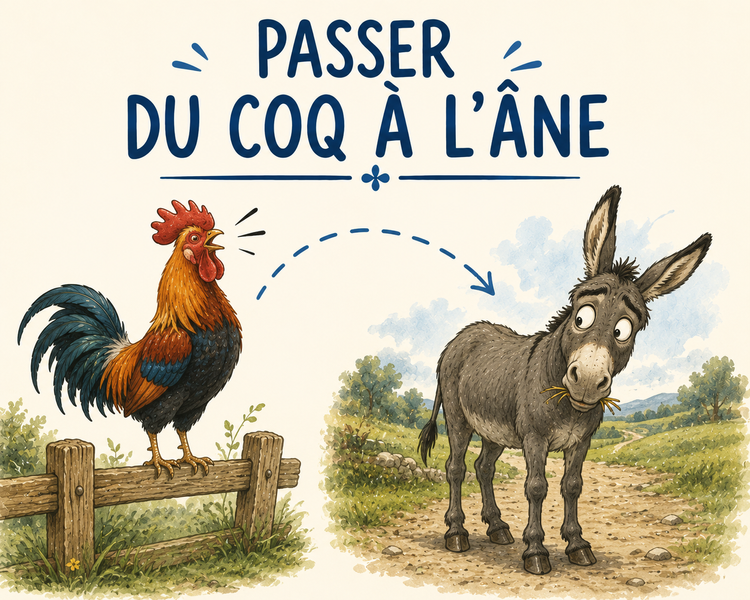
Passer du coq à l'âne
“To go from the rooster to the donkey”
What it means: To jump abruptly from one topic to a totally unrelated one.
Dating back to the 14th century, this expression has etymologists perplexed, as nobody's fully sure how or why these two animals specifically. The leading theory ties it to Clément Marot's 16th-century « coq-à-l'âne » poems, a genre built entirely on jumping between unrelated ideas.
Elle est passée du coq à l'âne en pleine réunion, on ne savait plus si on parlait budget ou vacances.« She jumped from topic to topic mid-meeting, we couldn't tell if we were talking budget or holidays anymore. »
Avoir la chair de poule
“To have chicken flesh”
What it means: To get goosebumps, from cold, fear, or a strong emotion.
It started as 17th-century medical vocabulary, « chair » meant skin at the time, and doctors reached for the image of a plucked chicken's bumpy skin to describe the same reaction on human skin. Vivid enough that it escaped the medical books and became everyday speech.
Ce film d'horreur m'a donné la chair de poule.« That horror movie gave me goosebumps. »
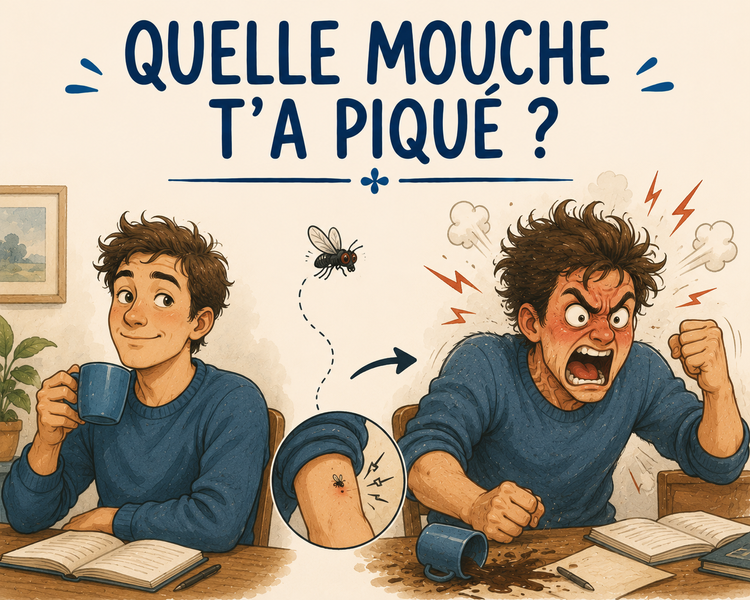
Quelle mouche t'a piqué ?
“Which fly bit you?”
What it means: What's gotten into you? Why are you reacting like that?
« Mouche » once covered biting insects more broadly, including horseflies, and the image is livestock suddenly bolting after a sting, a sharp, seemingly irrational reaction.
Il a quitté le bureau en claquant la porte. Quelle mouche l'a piqué ?« He stormed out of the office, slamming the door. What's gotten into him? »
Avoir des fourmis dans les jambes
“To have ants in your legs”
What it means: Pins and needles, or restlessness, an urge to get up and move.
First recorded in the early-to-mid 19th century, describing the tingling of blood flow returning after sitting still too long, compared to the feeling of ants crawling on skin.
Ça fait deux heures qu'on est en voiture, j'ai des fourmis dans les jambes.« We've been in the car for two hours, I've got pins and needles. »
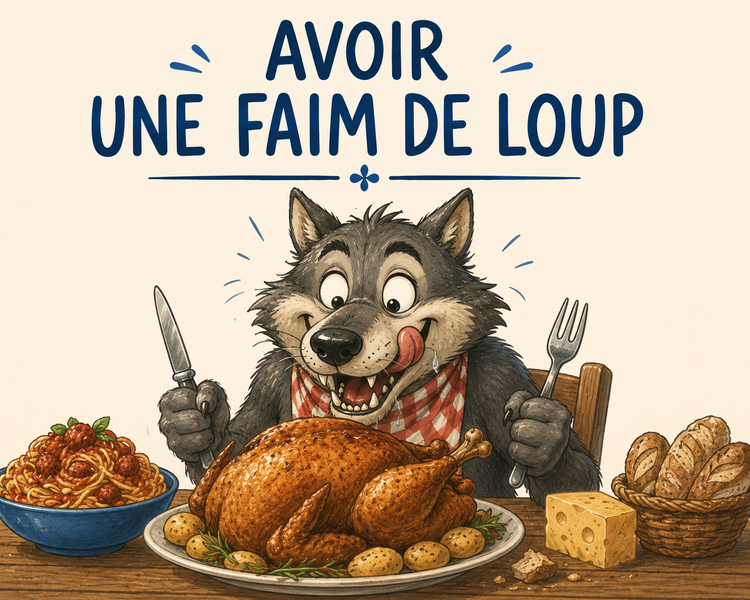
Avoir une faim de loup
“To have a wolf's hunger”
What it means: To be starving.
Builds on the older phrase « manger comme un loup » (to eat like a wolf), first recorded in 1640. The wolf's reputation in European folklore as the ultimate insatiable predator did the rest of the work, comparing your hunger to a wolf's was just natural hyperbole.
Also common: j'ai les crocs (« I've got the fangs »), a punchier, more casual way of saying the same thing.
Je n'ai rien mangé depuis ce matin, j'ai une faim de loup !« I haven't eaten since this morning, I'm absolutely starving! »
Poser un lapin à quelqu'un
“To put a rabbit on someone”
What it means: To stand someone up.
In 19th-century slang, « lapin » meant skipping out on a debt owed to someone, and the expression gradually shifted toward its modern meaning: not showing up to an arranged meeting, without warning.
Je l'ai attendu une heure au café, elle m'a posé un lapin.« I waited an hour at the café, she stood me up. »
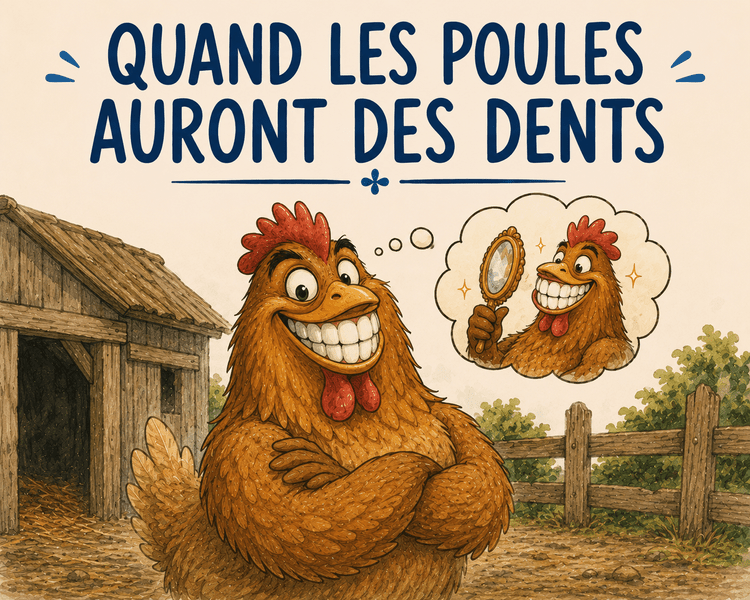
Quand les poules auront des dents
“When hens grow teeth”
What it means: Never.
Attested since the late 18th century. Hens don't have teeth and never will, so it joined the same family as « à la Saint-Glinglin » or « aux calendes grecques » as a colourful way to say « never. »
Je m'excuserai quand les poules auront des dents !« I'll apologize when pigs fly! »
Il fait un froid de canard
“It's duck cold”
What it means: It's bitterly cold.
The most widely cited explanation ties it to duck hunting: when ponds freeze over, ducks are forced onto open water to survive, becoming far more visible, and easier to hunt. That's likely when « duck weather » came to mean « cold weather. »
Couvre-toi, il fait un froid de canard ce matin.« Bundle up, it's bitterly cold this morning. »
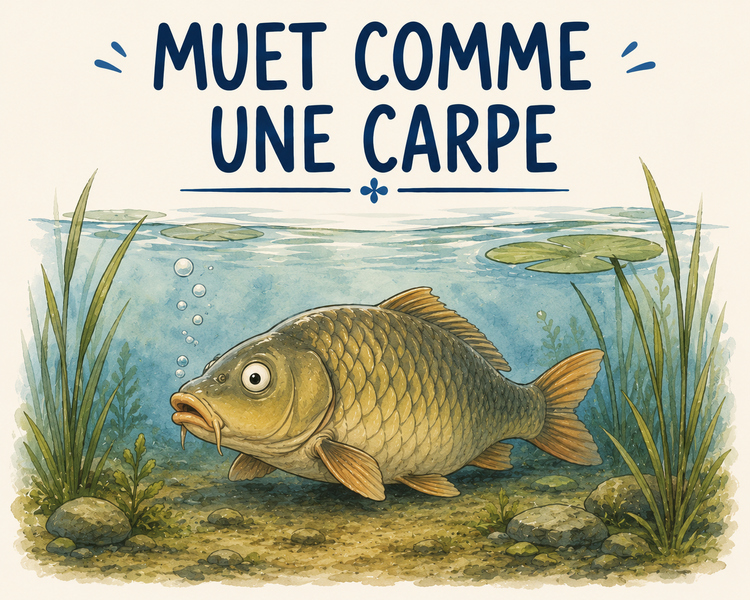
Muet comme une carpe
“Mute as a carp”
What it means: Completely silent, refusing to say a word.
Originally « muet comme un poisson » (mute as a fish), via Rabelais, in the 16th century. Nobody's entirely sure why carp took over the role specifically from 1612 onward, one theory points to an old belief that carp have no tongue, another to the fish's habit of surfacing with its mouth open, looking like it's about to speak and never does.
On lui a posé mille questions, il est resté muet comme une carpe.« We asked him a thousand questions, he stayed completely silent. »
Il pleut comme vache qui pisse
“It's raining like a cow peeing”
What it means: It's pouring rain.
First recorded in 1826, this is one of French's most literal idioms. The rain is simply compared to the sheer volume a cow produces when it relieves itself.
On a annulé le pique-nique, il pleut comme vache qui pisse depuis ce matin.« We cancelled the picnic, it's been pouring since this morning. »