
Ten French Colour Idioms You'll Actually Hear
French leans on colour constantly to describe fear, sadness, anger, and exhaustion, always figuratively, never literally. Here are ten of the colour idioms you'll actually hear.
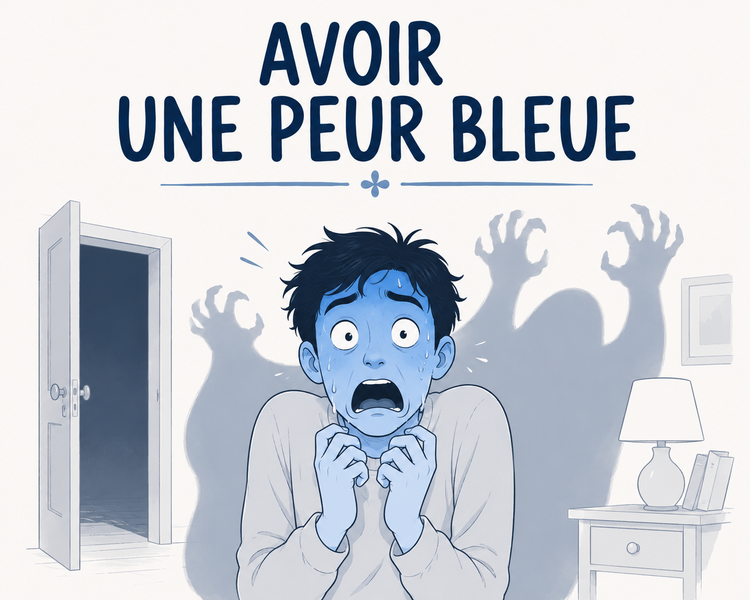
Avoir une peur bleue
“To have a blue fear”
What it means: To be terrified.
The leading documented theory links this expression to the 1832 cholera epidemic in Paris. The disease's most visible symptom was cyanosis, a bluish discoloration of the lips and fingertips, which became linked in people's minds with the terror of watching someone die from it.
Elle a une peur bleue des araignées.« She's terrified of spiders. »
Faire grise mine
“To make a grey face”
What it means: To look glum, or to give someone a cold reception.
Since medieval times, grey has been associated with sadness and melancholy, in contrast to brighter colours associated with joy.
Il a fait grise mine quand je lui ai annoncé que je ne pourrais pas venir.« He looked pretty glum when I told him I couldn't come. »
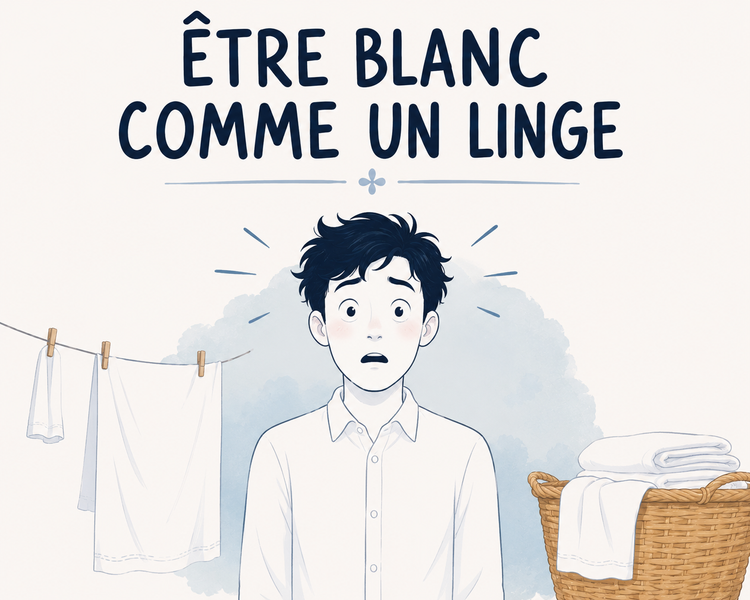
Être blanc comme un linge
“To be white as linen”
What it means: To go pale, from shock, fear, or illness.
Fear or shock drains blood from the face, and white linen was the standard visual comparison used for extreme paleness in the 18th century.
Quand il a appris la nouvelle, il est devenu blanc comme un linge.« When he heard the news, he went white as a sheet. »
Se mettre au vert
“To put oneself to the green”
What it means: To retreat to the countryside to rest, or to lie low.
The expression originally applied to horses. « Vert » meant fresh pasture grass, and putting a horse « au vert » meant turning it out to graze. The expression shifted to its modern meaning, a person escaping to the country, by the mid-19th century.
Après ce début d'année éprouvant, j'ai besoin de me mettre au vert quelques jours.« After such a stressful start to the year, I need to get away to the countryside for a few days. »
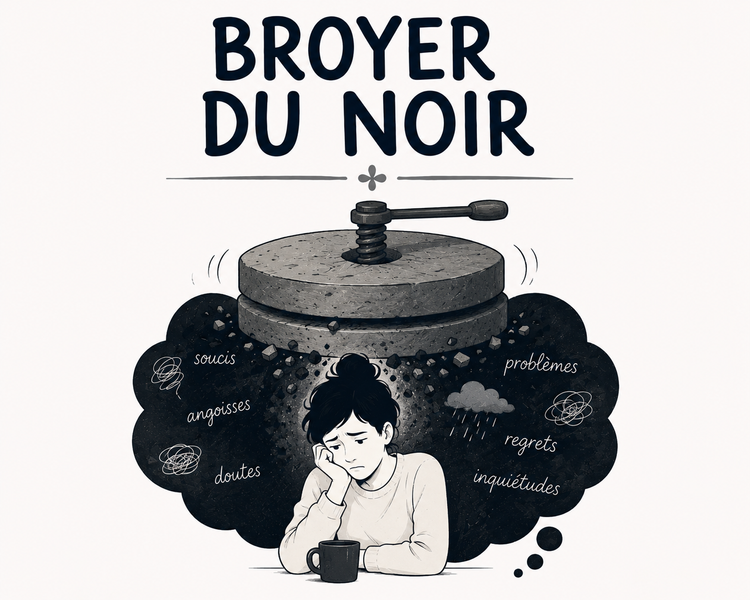
Broyer du noir
“To grind black”
What it means: To be in a dark mood, to dwell on gloomy thoughts.
16th-century painters ground charred wood and other pigments to make black paint. In the 18th century, doctors borrowed the image for the theory of the four humours, in which an excess of « black bile » was believed to cause melancholy, the same idea behind the expression « se faire de la bile ». The figurative meaning, to be depressed, was in place by the 19th century.
Il broie du noir depuis que sa femme l'a quitté.« He's been in a dark mood ever since his wife left him. »
Tirer à boulets rouges sur quelqu'un
“To fire red-hot cannonballs at someone”
What it means: To attack or criticize someone fiercely and relentlessly.
In naval and siege warfare from at least the 17th century, cannonballs were heated red-hot in a forge, sometimes for several hours, before being fired. This didn't just add impact damage, a red-hot ball could also set fire to whatever it struck, a useful way to spread chaos among a besieged enemy. The expression kept its literal military meaning through the 18th century, then shifted to describe a fierce verbal attack by the century's end. It appears in this figurative sense in Zola's L'Argent, describing a particularly savage press campaign against a character.
La presse a tiré à boulets rouges sur le ministre après ses déclarations.« The press attacked the minister fiercely after his statements. »
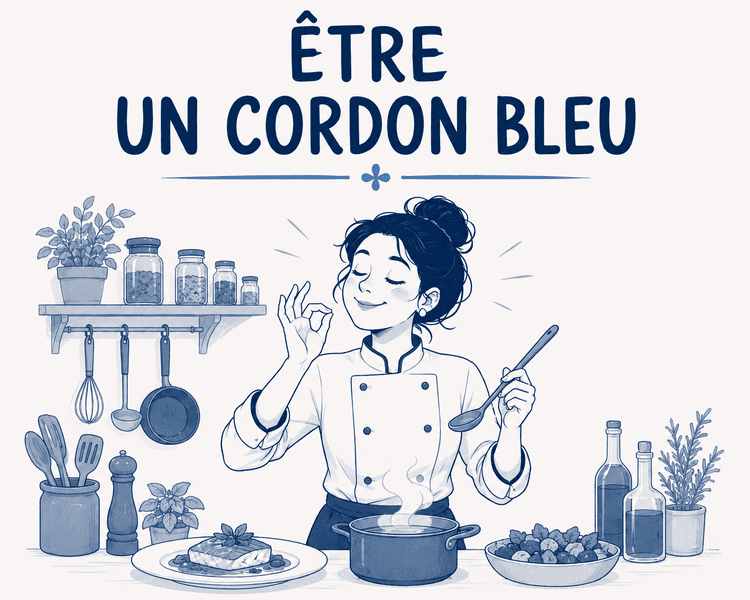
Être un cordon bleu
“To be a blue ribbon”
What it means: To be an excellent cook.
In 1578, Henri III founded the Ordre du Saint-Esprit, the most prestigious order of chivalry in the French monarchy. Its knights wore a Maltese cross on a blue ribbon, and were known for gathering as a « club » of gourmets who cultivated the art of fine food and wine. Over time, « cordon bleu » shifted from marking a knight's rank to marking someone's skill in the kitchen.
Ma grand-mère est un véritable cordon bleu. Tout ce qu'elle cuisine est délicieux.« My grandmother is a real gourmet cook, everything she makes is delicious. »
Rire jaune
“To laugh yellow”
What it means: To force a laugh you don't mean, usually to mask embarrassment, annoyance, or discomfort.
The earliest recorded use dates to 1640, when Antoine Oudin wrote « il rit jaune comme farine », describing a fake, insincere laugh. A second, more commonly repeated theory ties yellow to jaundice, sufferers forcing themselves to smile despite a sickly, sallow complexion.
Il a ri jaune quand on s'est moqué de sa nouvelle coupe de cheveux.« He forced a laugh when we teased him about his new haircut. »
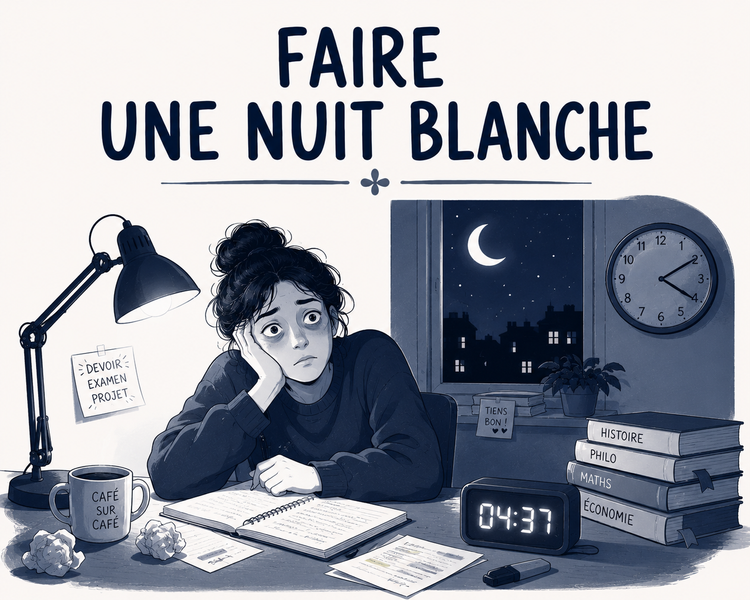
Faire une nuit blanche
“To make a white night”
What it means: To pull an all-nighter, to go a night without sleep.
The most commonly cited theory traces the expression to medieval knights, who wore white tunics and stayed awake all night in prayer and fasting before their knighting ceremony, the white symbolizing purity and clarity of mind.
J'étais tellement en retard dans mes révisions que j'ai fait une nuit blanche.« I was so behind on my revision that I pulled an all-nighter. »
Bête noire
“Black beast”
What it means: Someone's pet peeve, or the person or thing they particularly dislike or dread.
French hunters traditionally nicknamed the wild boar « le noir », since a provoked boar is the most dangerous wild animal a person is likely to encounter in France. That hunting term merged with an older expression, « être la bête de quelqu'un », to produce the modern idiom. The phrase also draws on a broader, older superstition, black animals crossing someone's path, such as cats or ravens, were long considered bad omens in European folklore.
La comptabilité est la bête noire de Valérie.« Accounting is Valérie's pet peeve. »