
Ten French Body-Part Idioms No Textbook Teaches You
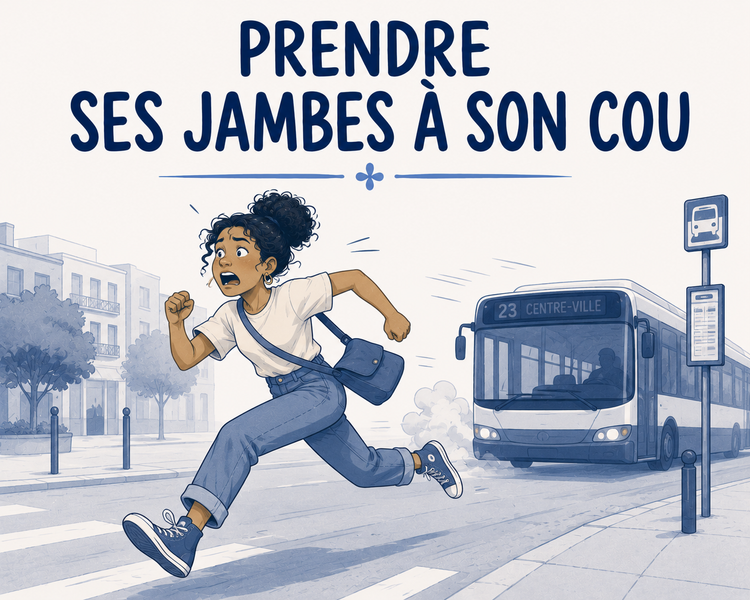
Prendre ses jambes à son cou
“To take one's legs to one's neck”
What it means: To run away as fast as possible.
The original form was « prendre ses jambes sur son col » (« col » meaning neck or collar at the time). Travelers packed their bag with a strap slung over the shoulder and across the neck, so the phrase was a wry reminder not to forget your legs too. « Col » drifted into « cou » by the 18th century, and the meaning shifted from « pack for a trip » to « run away fast. »
Elle a pris ses jambes à son cou quand ils ont essayé de lui vendre un abonnement hors de prix.« She bolted the moment they tried to sell her an overpriced subscription. »
Couper l'herbe sous le pied
“To cut the grass under someone's foot”
What it means: To get ahead of someone and undercut them, often by acting first.
Traceable to the late 16th century, when « herbe » was a broader word for one's means of subsistence. The expression likely blended with an older military phrase, « couper les vivres » (to cut off supplies), and originally meant depriving someone of their livelihood before widening to its modern sense of undercutting someone in general.
Il m'a coupé l'herbe sous le pied en présentant sa candidature.« He beat me to it by putting in his application first. »
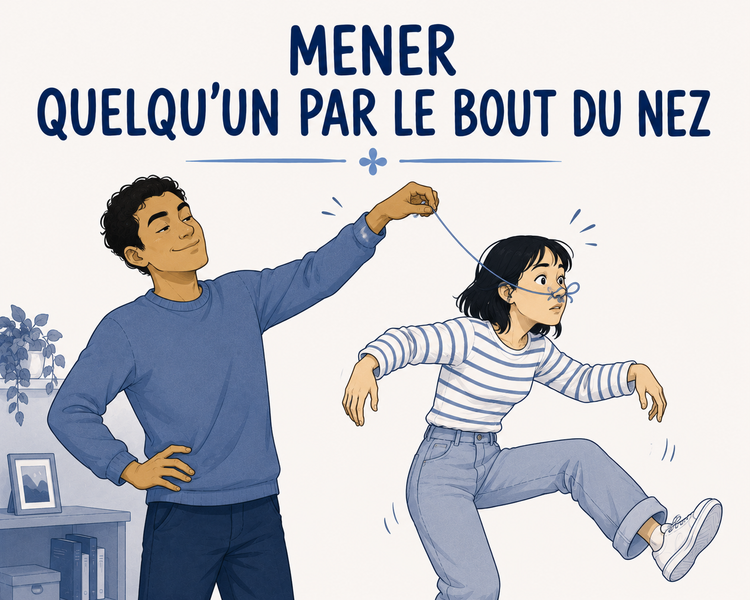
Mener quelqu'un par le bout du nez
“To lead someone by the tip of the nose”
What it means: To control someone completely, making them do exactly what you want, often without them realizing it.
The image comes from livestock handling: oxen and bulls were led by a ring or chain fixed through the nose, the most sensitive point on the animal, meaning even a light tug there was enough to control a much stronger creature. The metaphor transferred cleanly to people, someone « led by the nose » is being controlled with minimal resistance.
Son patron la mène par le bout du nez, et elle ne s'en rend même pas compte.« Her boss has her wrapped around his finger, and she doesn't even realize it. »
Prendre son courage à deux mains
“To take one's courage in both hands”
What it means: To work up the nerve to do something difficult or frightening.
« Courage » itself descends from the Latin cor (heart), so the phrase quietly echoes an older idea of the heart as the seat of feeling and resolve.
Elle a pris son courage à deux mains et a demandé une augmentation de 10 %.« She worked up the nerve and asked for a 10% raise. »

Ne pas avoir froid aux yeux
“To not have cold eyes”
What it means: To be bold, fearless, unafraid to act or speak plainly.
« Avoir froid aux yeux » is believed to have originally meant the opposite of its modern sense, to be fearful or cowardly. By the 19th century, in criminal slang, the phrase seems to have shifted, and today it survives almost exclusively in its negative form (« ne pas avoir froid aux yeux »), simply negating that older meaning: not fearful, in other words, bold.
Alain compte escalader l'Everest. Il n'a vraiment pas froid aux yeux.« Alain is planning to climb Everest. He's got real nerve. »
Faire la fine bouche
“To make a fine mouth”
What it means: To be picky or fussy, especially about food.
Originally « faire la petite bouche » (to make a small mouth), the expression described someone eating sparingly or fussily; « petite » drifted to « fine » over time. While it started out specifically about food, it's now used more broadly for anyone being needlessly picky or hard to please, whether about a gift, an offer, or a compliment, not just a meal.
Il a refusé l'offre à cause du salaire. Il ne pourra pas continuer à faire la fine bouche très longtemps.« He turned down the offer because of the salary. He won't be able to keep being this picky for long. »
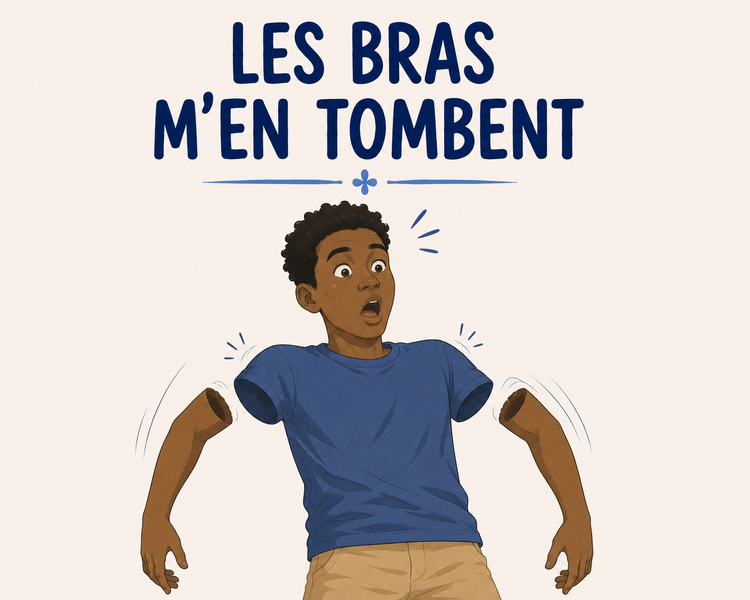
Les bras m'en tombent
“My arms fall from it”
What it means: To be utterly stunned or dumbfounded by something.
In period literature, the arm symbolized strength and the capacity to act, so « arms falling » symbolized the opposite, a sudden, total incapacity to react, brought on by shock.
Quand j'ai appris qu'il avait démissionné sans prévenir personne, les bras m'en sont tombés.« When I found out he'd resigned without telling anyone, I was completely stunned. »
Au pied levé
“With foot lifted”
What it means: On the spot, without preparation, impromptu. The image is of someone caught mid-departure, one foot already lifted to leave, being asked something before they can get away.
Il a dû prendre la parole au pied levé, sans une minute pour se préparer.« He had to speak on the spot, without a minute to prepare. »
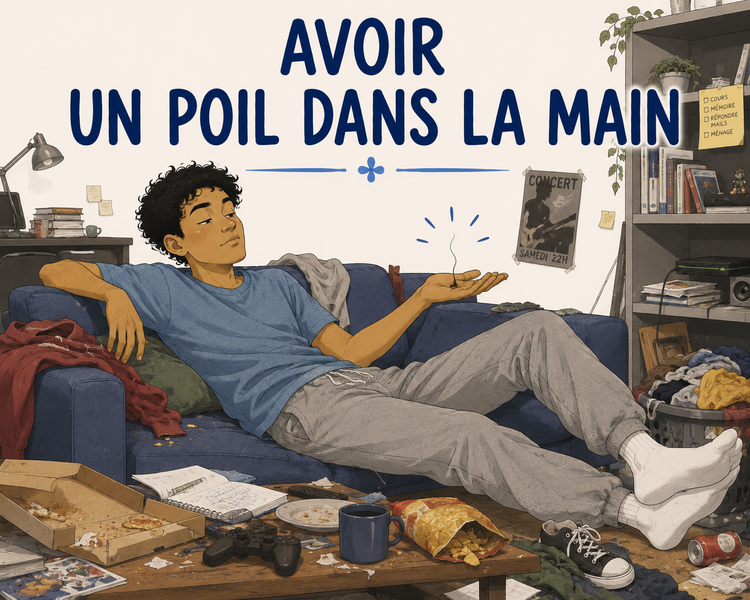
Avoir un poil dans la main
“To have a hair in one's hand”
What it means: To be extremely lazy.
The idiom appears regularly in 19th and 20th-century literature, including Zola's L'Assommoir, describing idle workers heading to the bar instead of working. Most people assume the logic is obvious, a hand so unused to labor that hair grows on it, but reference dictionaries admit the true origin is unknown.
Il laisse son collègue faire tout le travail. Il a un sacré poil dans la main.« He leaves all the work to his colleague. He's got quite the lazy streak. »
Avoir la puce à l'oreille
“To have the flea at one's ear”
What it means: To become suspicious, to sense that something is off.
Since the 17th century, the phrase has come to mean a sense of suspicion, likely reinforced by a separate folk belief that itching ears meant someone was talking about you behind your back.
Ce détail m'a mis la puce à l'oreille. Je sentais qu'il me mentait.« That detail made me suspicious. I could tell he was lying to me. »